
Misconceptions About Rear-Facing Car Seats
*Remunerated Post*
When it comes to buying car seats for children, whether that’s for the first time or progressing to the next stage as they grow older, it can seem that the rules and regulations around them are changing or updating all the time. So sometimes it can be quite confusing to know what the best safety seat is, and whether or not to face them forward or backwards.
Seating your child in a rear-facing position for longer, may be a new concept to some parents, so there can be a lot of misinformation out there, even though extended rear-facing car seats have been around since the ‘80s and can be life-saving. This guide is here to help and will de-bunk some of the misconceptions you might have about rear-facing car seats.
Table of Contents
Is it against the law?
Using a rear-facing car seat is only a legal requirement in the UK for babies from birth up to the age of 15 months, in regards to height-based seats, or up to 9kg if the seat is based on weight. This may be the reason that in a recent survey conducted by the In Car Safety Centre, 1 in 4 parents planned to move to forward-facing car seats as soon as possible, and 1 in 3 planned to go forward-facing sooner than is recommended.
However, keeping your child in rear-facing for longer is not illegal, and has actually proven to be better and safer by the doctors and professors of road and traffic safety, around the world. According to these experts, it keeps your child safer and less at risk of injury during an accident, offering 75% more protection. This is because their whole body is protected in the event of collision, with the car seat taking maximum impact, especially for the most common and dangerous of accidents, a head-on collision. Whereas in a forward-facing car seat, the torso is held in place, but puts strain on the neck and limbs, as they are flung forward. Therefore, staying in a rear-facing car seat for as long as possible is best for your child.
Will my child be uncomfortable?
The simple answer to this is no. Most rear-facing car seats are installed to allow for a gap between the child car seat and the back seat of the car. This is also dependant on the size of the car and space between the vehicle’s front and back seats. Its always best to get the seat installed or checked by an expert, to help with this.
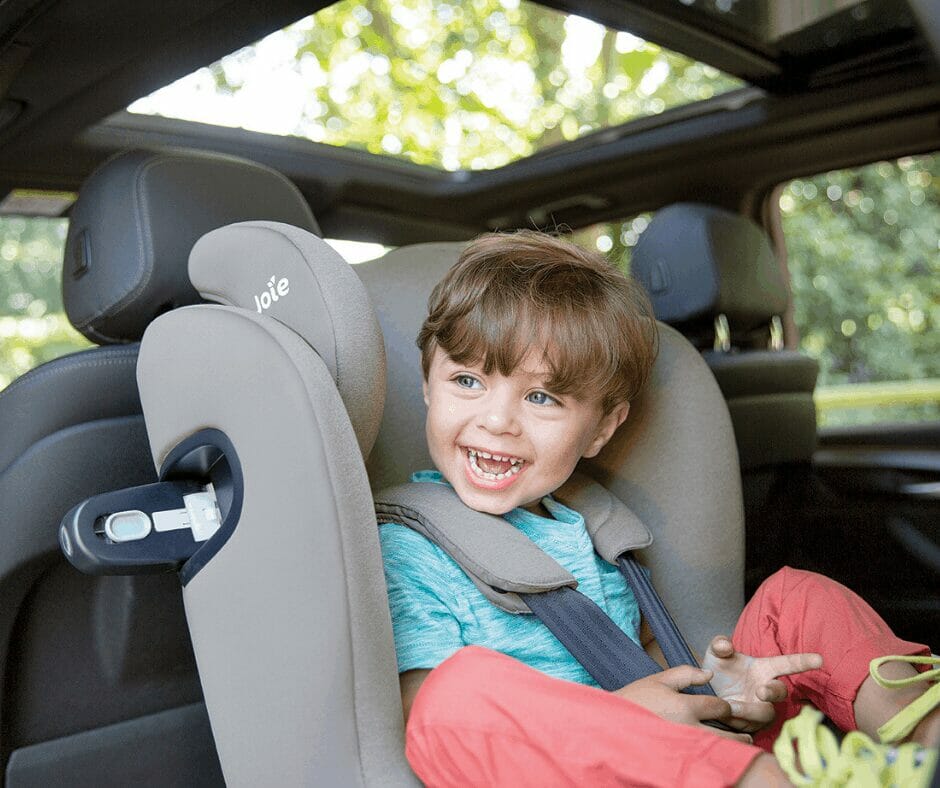
Otherwise, most children are flexible enough to have their legs bent or tucked up. In fact, they tend to prefer it, and are happy with having their legs crossed when sitting rear-facing. And having the backseats of the car in front of them, can actually offer them support for their legs.
Remember, the right seat depends on the weight and height of your child, so they are only too big when they exceed this. It’s perfectly fine for a baby to dangle their feet over the edge of the seat, or for a toddler to have their legs bent or crossed, if they are in the correct seat for their height and weight.
Using a specific extended rear-facing car seat for your little one, can actually allow your child to sit rear-facing for longer than the legal limit as well as enabling them to be as comfortable as possible. Not only this, but some of the best brands make it easier to get your child in and out of your car, with 360° rotation. Some extended rear-facing car seats from Britax, in particular, go all the way up to 6 years old, and feature an adjustable headrest and harness, multi-position recline, and chest and belly pads, to provide extra comfort.
Will I able to communicate with my child whilst driving?
In general, you shouldn’t be turning round to speak to your child when driving, but we know parents still need to check on their child or see when they are sleeping. There are accessories available, like specially designed mirrors, that allow you and your child to see each other when they’re in a rear-facing safety seat.
In terms of your little one getting fed up of facing the back car seat, this is actually a common misconception, as they can only see the back of the front seat in a forward-facing seat, anyway. In a rear-facing car seat, they are more likely to be have a better view out of the side windows, as well as the back window, which is much more interesting during a car journey.